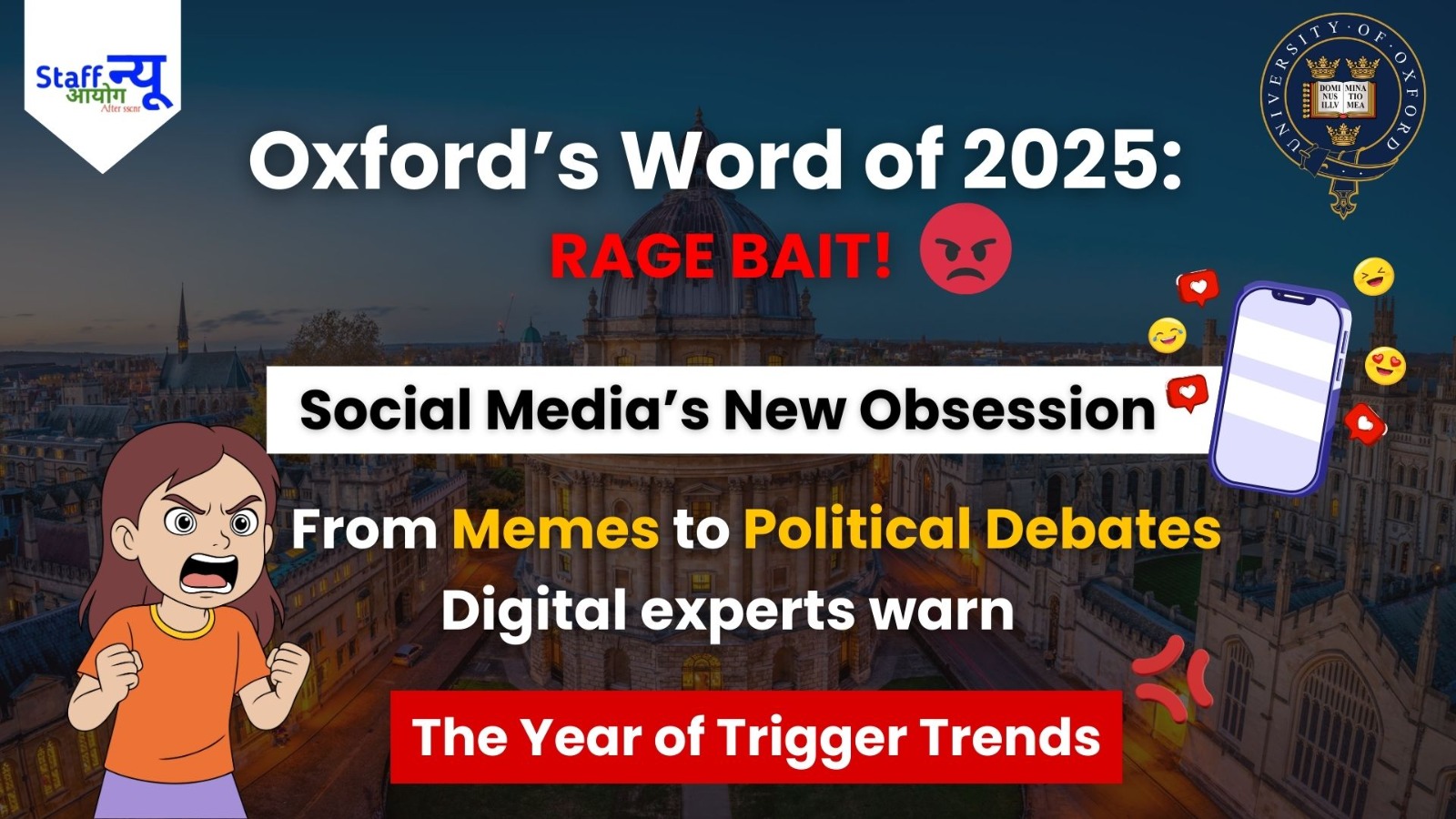
Oxford Dictionary Names ‘Rage Bait’ Word of the Year 2025: The Rise of High-Emotion Click Culture
In an age where attention is the new currency, Oxford Dictionary’s Word of the Year 2025—“Rage Bait”—could not have been more accurate. It perfectly captures the era we’re all scrolling through: a digital world where outrage sells faster than facts, and emotional reactions travel quicker than reason.
But why this word? Why now? And what does it reveal about how we communicate, consume content, and participate in public conversations?
Let’s break it down.
What is “Rage Bait”?
“Rage bait” refers to content intentionally designed to provoke anger, spark arguments, or trigger emotional reactions online.
Think controversial clips, misleading headlines, polarising opinions—anything crafted to make you stop, react, share, and fight in the comments.
Social platforms love it because engagement shoots up.
Creators love it because attention brings visibility.
But the cost? Our collective digital sanity.
| Join Telegram For Fast Update | Join |
Why Oxford Chose It for 2025
Oxford Languages tracks words that shape culture, public behaviour and communication trends. This year:
- Online outrage reached record levels
- Political and social debates became hyper-polarised
- Algorithm-driven content pushed emotional extremes
- “Rage bait” saw a 400% rise in search usage
- Media literacy conversations surged globally
Put together, Oxford concluded that this is not just a word, but a defining marker of how the world is reacting—and being manipulated—online.
The Psychology Behind Rage Bait
Rage spreads faster than joy.
Neurologically, anger activates survival responses, making people respond impulsively and loudly. Platforms rely on this reflex to keep you scrolling.
Studies cited by Oxford show:
- Angry posts travel 5x faster than neutral posts
- Outrage-based content increases screen time by 38%
- Users are more likely to share content that “shocks” or “angers” them
This isn’t random—it’s engineered behaviour.
Impact on Society
“Rage bait” is reshaping more than online conversations:
- Misinformation spreads faster
- Digital fatigue and burnout rise
- Public trust in media drops
- Young audiences confuse engagement with truth
Oxford’s selection acts as a warning: if we don’t filter what we consume, we become the product.
So What Should Readers Do?
- Pause before reacting
- Verify before sharing
- Unfollow sources that thrive on outrage
- Spend more time with long-form, credible content
- Support positive, constructive storytelling
Final Take
“Rage Bait” is not just a word—it’s a mirror.
And Oxford’s choice for 2025 is a reminder that our attention is powerful, and wherever we place it, that world grows.
If we choose outrage, we get chaos.
If we choose clarity, we get direction.
The internet reflects us.
The question is—what do we want it to show?
For the latest update about Govt. Job, please follow our Facebook, Telegram, What’s app channel & Instagram